For Korean ramyun beginners, choosing your first bowl can feel confusing—but it’s easier than it looks.
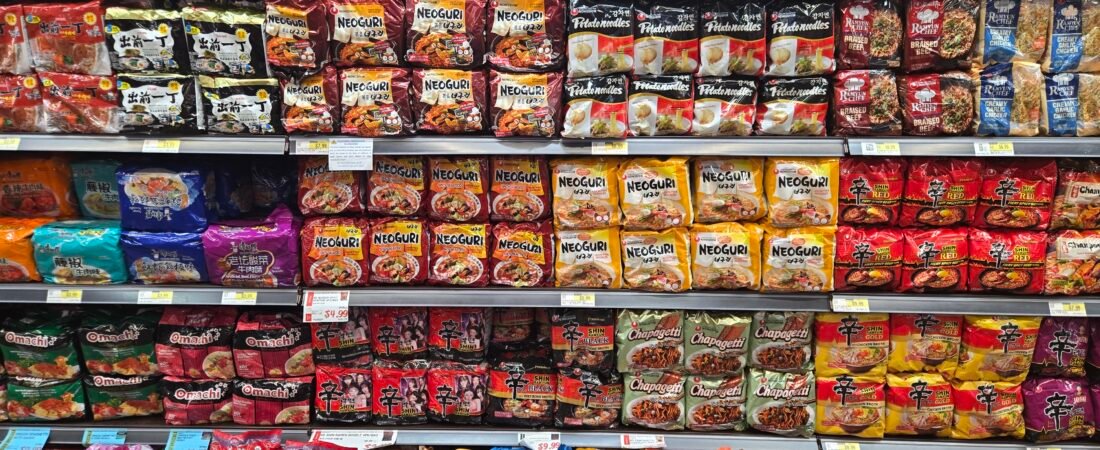
You’ve probably seen Korean ramyun—even if you weren’t looking for it.
These days, Korean instant noodles can show up in places you already shop. You might notice them at a regular grocery store, a convenience store, a big-box retailer, or simply while browsing the instant noodle aisle.
Maybe it’s the familiar red package of Shin Ramyun. Maybe it’s a colorful pack of Buldak. Or maybe you’ve stopped in front of a shelf full of Korean noodles and wondered:
“What are these—and which one should I try?”
Korean ramyun used to be something many shoppers outside Korea mainly encountered at Korean or Asian grocery stores. Today, it’s much easier to come across.
But that creates a different problem:
There are a lot of choices.
Spicy or mild? Soup or stir-fried? Cup or bag? What’s the difference between Korean ramyun and Japanese ramen? And if this is your first time, where should you start?
That’s exactly what this guide is for.
What Is Korean Ramyun?
In Korea, ramyun (라면, pronounced “rah-myoon”) usually means instant noodles.
It can be a quick snack, an easy lunch, a late-night meal, or the starting point for something much more elaborate.
A typical package contains noodles, seasoning, and often dried vegetables or other ingredients. Follow the package directions, and within a few minutes you have a bowl of ramyun.
But “ramyun” doesn’t describe just one flavor. You’ll find spicy soups, seafood broths, mild varieties, black-bean noodles, kimchi flavors, stir-fried noodles, and much more.
So your first question probably shouldn’t be:
“What’s the best Korean ramyun?”
A better question is:
“What kind of Korean ramyun would I enjoy?”
Korean Ramyun vs. Japanese Ramen: What’s the Difference?
The words ramyun and ramen sound almost identical, which can be confusing for beginners.
Japanese ramen commonly refers to a freshly prepared noodle dish with broth, noodles, and toppings, often served at a ramen restaurant. Korean ramyun, on the other hand, usually refers to instant noodles.
The distinction isn’t absolute—Japan has instant ramen, and Korea has freshly prepared noodle dishes—but that’s how the words are commonly used in everyday conversation.
Korean ramyun is especially known for bold seasoning, chewy noodles, and a wide range of flavors, including plenty of non-spicy options.
So when someone in Korea says, “Let’s cook ramyun,” there’s a good chance a package of instant noodles and a pot are about to appear.
Is Korean Ramyun Always Spicy?
Definitely not.
This is one of the biggest misconceptions for beginners. Korea has become famous for extremely spicy noodles—especially with the worldwide popularity of Buldak.
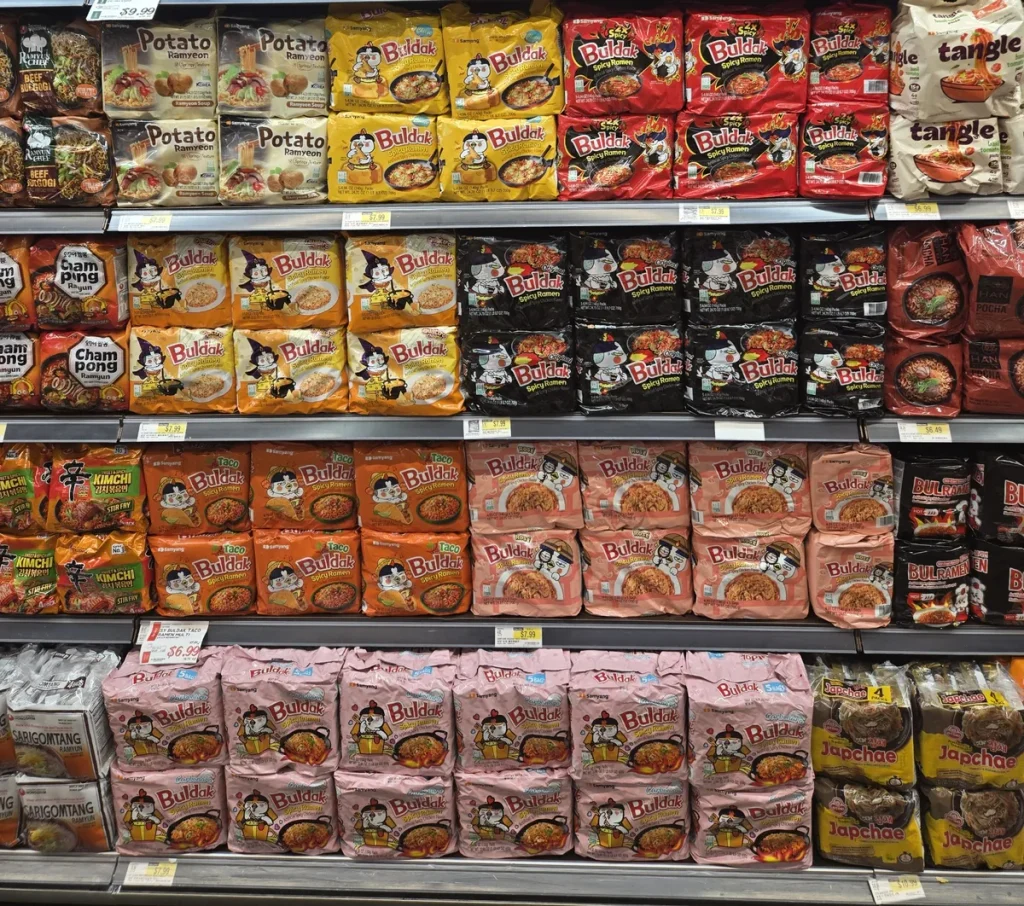
But Korean ramyun isn’t one giant spicy-food challenge. You’ll find mild soups, savory broths, seafood flavors, black-bean noodles, spicy soups, and extremely hot stir-fried noodles.
Think of it as a spectrum:
Mild → Savory → Spicy → Very Spicy → “What have I done?”
If you rarely eat spicy food, start somewhere comfortable. Your first Korean ramyun doesn’t need to be the hottest package on the shelf—you can always work your way up.
Cup Ramyun vs. Bag Ramyun: Which Should You Choose?
One of the first choices you’ll notice is the packaging. Korean ramyun often comes in a cup, bowl, or bag, and the best choice depends mostly on where and how you plan to eat it.
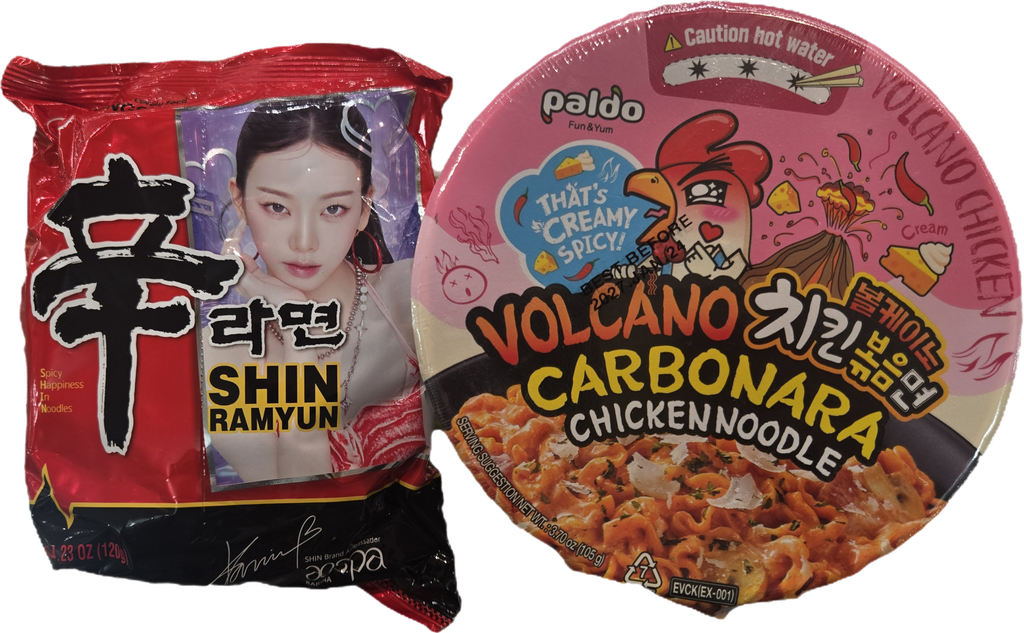
Cup Ramyun: Convenience Wins
Cup ramyun is all about convenience. Depending on the product, preparation may be as simple as adding seasoning, pouring in hot water, and waiting a few minutes.
It’s especially useful at work, in a dorm, at a hotel, while traveling, or anywhere you have hot water but not a full kitchen. Cleanup is minimal, too.
Bag Ramyun: More Room to Experiment
If you have a stove and a pot, bagged ramyun gives you much more freedom.
You can adjust the cooking time and water and easily add eggs, green onions, dumplings, vegetables, or other toppings. A simple package can quickly become a more substantial meal.
Cup vs. Bag at a Glance
| Cup Ramyun | Bag Ramyun |
| Very Convenient | Requires a pot |
| Usually needs only hot water | Usually cooked on a stove |
| Minimal cleanup | Some cleanup |
| Great for work or travel | Great at home |
| Less room to customize | Easy to customize |
There isn’t a winner—they simply serve different purposes. But for your first Korean ramyun experience at home, we’d lean toward the bag because it gives you more control and room to customize.
Is Korean Ramyun Difficult to Cook?
Not at all.
Most Korean ramyun is designed to be quick and easy to prepare. For many soup-style bagged ramyun products, the basic process is simple:
- Bring the water to a boil.
- Add the noodles and seasoning.
- Cook for a few minutes.
- Add any extras you want.
- Enjoy it while it’s hot.
Follow the Package Instructions the First Time
Water amounts and cooking times vary by product, and they can make a noticeable difference. Too much water can weaken the broth, while overcooking can make the noodles lose their chewy texture.
For your first bowl, follow the package instructions. Once you know how it’s supposed to taste, start experimenting with firmer noodles, less broth, eggs, vegetables, or whatever sounds good to you.
Not All Korean Ramyun Is Soup
One important thing to know before you start shopping: not all Korean ramyun comes with broth.
Some are soup-style, while others are meant to be drained and mixed with sauce.
Buldak Original is a good example. You boil the noodles, drain most of the water, add the sauce, and mix or stir-fry everything together.
The result is very different from traditional soup-style ramyun, so always check the package directions before cooking.
Korean Ramyun for Beginners: Which One Should You Try First?
Here’s where things get fun.
Instead of ranking Korean ramyun from “best” to “worst,” choose based on what kind of experience you want.
Do you want classic spicy ramyun? Something milder? Seafood? Or no soup at all?
Start with what sounds good to you.
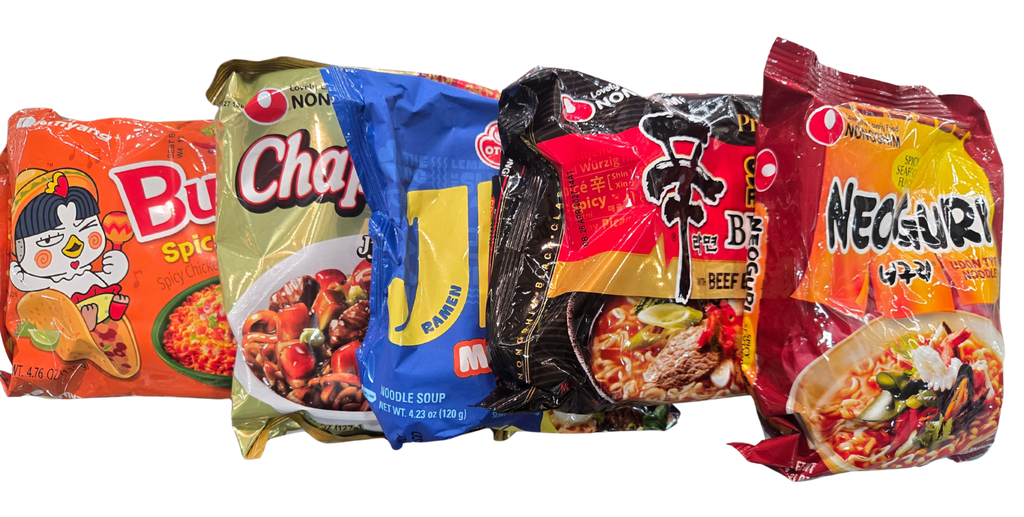
If You Want the Classic Korean Ramyun Experience: Shin Ramyun
Shin Ramyun is one of the best-known examples of classic Korean spicy instant noodles. It combines chewy noodles with a savory, spicy broth that has plenty of flavor underneath the heat.
If you already enjoy moderately spicy food, it’s a natural place to start.
KCraving beginner take: A great first choice if you want to understand the classic Korean spicy ramyun experience.
If You Want Something Milder: Jin Ramen Mild
If you want Korean-style soup noodles without too much heat, Jin Ramen Mild is an approachable choice.
You still get a savory broth and chewy noodles, but spiciness isn’t the main attraction. If you enjoy it, you can always move on to Jin Ramen Spicy or hotter varieties later.
KCraving beginner take: A comfortable starting point if you’re curious about Korean ramyun but aren’t sure how much spice you can handle.
If You Like Seafood Flavors: Neoguri
Neoguri offers something noticeably different, with thicker, chewier noodles and a rich seafood-style broth.
It’s a good reminder that Korean ramyun isn’t just about spice—the broth and noodle texture can completely change the experience.
KCraving beginner take: A great choice if you enjoy seafood flavors and want a thicker, chewier noodle.
If You Want Something Savory and Slightly Sweet: Chapagetti
If spicy soup isn’t what you’re looking for, Chapagetti takes Korean instant noodles in a completely different direction.
It’s inspired by jjajangmyeon (짜장면, pronounced “jja-jang-myun”), a popular Korean noodle dish with a thick black bean sauce. Chapagetti is brothless, with a rich, savory black-bean-style sauce and a slightly sweet, roasted flavor.
That makes it very different from the spicy red soups many beginners associate with Korean ramyun—and that’s exactly why it’s worth trying.
KCraving beginner take: A great choice if you prefer savory, slightly sweet flavors and little heat.
Korean food note: Jjajangmyeon developed in Korea from a Chinese-style noodle dish and evolved into something distinctly Korean.
If You Love Serious Heat: Buldak
If you already love very spicy food, Buldak is probably a name you’ve seen.
Unlike soup-style ramyun, Buldak is prepared more like a sauced, stir-fried noodle: cook the noodles, drain most of the water, then mix in the intensely spicy sauce.
And yes—it really is hot.
Different Buldak varieties offer different flavors along with the heat, but if you rarely eat spicy food, we wouldn’t recommend Original Buldak as your first Korean ramyun.
If you’re already the person who orders the hottest thing on the menu? This might be your bowl.
KCraving beginner take: A famous Korean noodle experience for serious spice lovers—but probably not the best starting point for spice beginners.
Quick Beginner Guide
| If you want… | Try… |
| A classic spicy Korean ramyun | Shin Ramyun |
| Something milder | Jin Ramen Mild |
| Seafood flavor and thicker noodles | Neoguri |
| Savory, slightly sweet noodles without soup | Chapagetti |
| Serious heat and stir-fried noodles | Buldak |
Your First Korean Ramyun Shopping Checklist
Standing in front of a shelf full of Korean ramyun?
Don’t worry about memorizing every brand or flavor. Ask yourself three simple questions:
🌶️ How much heat can I actually handle?
Be realistic. If you normally avoid spicy food, start mild and work your way up. There’s no prize for suffering through your first bowl.
🍜 Do I want soup or sauced noodles?
This immediately narrows your choices. Shin Ramyun, Jin Ramen, and Neoguri are soup-style options, while Chapagetti and Buldak take you in a brothless direction.
🥘 Do I want a cup or a bag?
A cup is convenient for work, travel, or a dorm. If you have a kitchen and want to add eggs, vegetables, dumplings, or other toppings, a bag gives you more flexibility.
Don’t worry about finding the “best” Korean ramyun. Find the one that sounds best to you.
From Korean Comfort Food to a Global Ramyun Playground
The package instructions may tell you how to cook ramyun—but today, that’s often just the beginning.
In Korea, people have long customized ramyun with ingredients like eggs, green onions, kimchi, rice cakes, dumplings, and cheese.
But customizing ramyun is no longer just a Korean habit.
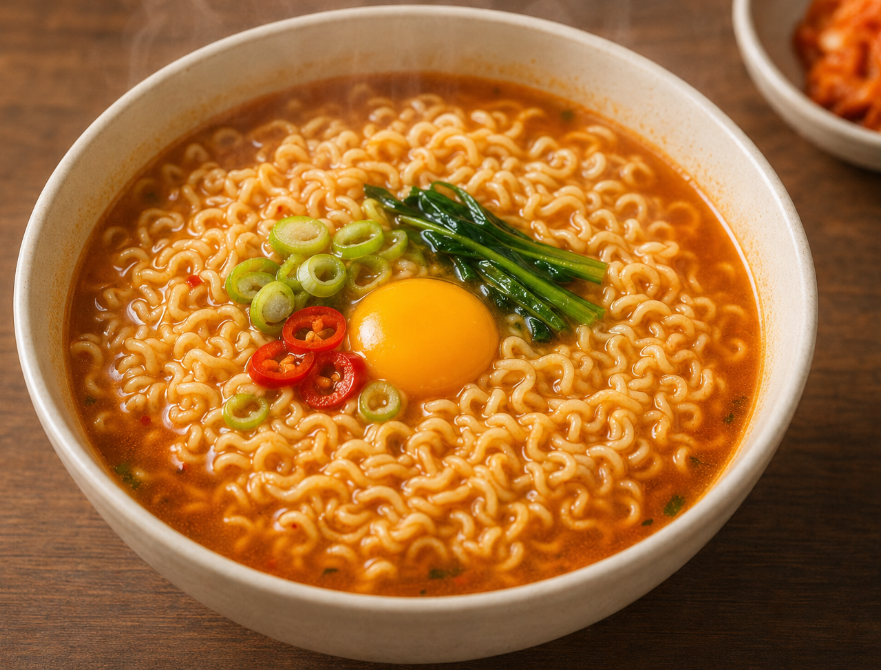
Scroll through YouTube, TikTok, or Instagram and you’ll find people around the world turning Korean instant noodles into completely different dishes.
Some make them creamy or cheesy. Others add meat, seafood, vegetables, dumplings, or flavors from their own food cultures. Some still look like familiar Korean ramyun; others barely resemble the picture on the package.
That may be one of the most interesting things about Korean ramyun today:
It has become a canvas.
The noodles and seasoning give you a starting point. What happens next can depend on where you live, what you grew up eating, what’s in your refrigerator—or simply what you saw someone make online.
Start with Some Korean Favorites
If you’re new to ramyun, these are easy places to begin.
Add an Egg
Crack an egg into soup-style ramyun toward the end of cooking. Leave it mostly undisturbed for a softer yolk, or stir it into the broth for a different texture.
Add Green Onion
A little sliced green onion near the end adds freshness and aroma without overpowering the broth.
Add Cheese
A slice of cheese melting over hot, spicy noodles adds creaminess and can soften some of the heat.
Add Mandu
A few mandu (만두), Korean dumplings, can quickly turn ramyun into a more substantial meal. Just remember that frozen dumplings may need more cooking time than the noodles.
Add Tteok
Tteok (떡), Korean rice cakes, add a chewy texture and make the bowl more filling.
Eat It with Kimchi
Try cool, crunchy kimchi between bites of hot noodles. The acidity and crunch create a great contrast with a rich broth.
Then Make It Your Own
Those Korean favorites are only the beginning.
Today, people around the world are experimenting with cream, cheese, chicken, beef, seafood, sausage, mushrooms, garlic, vegetables, chili oils, sauces, spices, and much more.
Some combinations become viral recipes on TikTok or YouTube. Others are simply someone’s favorite late-night meal.
For your first bowl, follow the package directions and learn what the noodles and seasoning taste like. Then start experimenting.
Add something you already love. Change the texture. Add more protein. Turn a snack into a meal.
There really isn’t one “correct” way to enjoy ramyun.
That freedom may be one reason Korean ramyun has traveled so well around the world. It’s distinctly Korean, but easy for people from different food cultures to make their own.
Your favorite Korean ramyun recipe might not exist yet.
Where Can You Find Korean Ramyun?
One of the biggest changes in Korean ramyun is how easy it has become to find outside Korea.
Not long ago, many people might have associated Korean instant noodles mainly with Korean or Asian grocery stores. Today, you may come across them during your regular shopping—at supermarkets, convenience stores, large retailers, specialty markets, or online.
In other words, you don’t always have to go looking for Korean ramyun anymore.
Sometimes, it finds you first.
Maybe you notice the familiar red Shin Ramyun package in your local grocery aisle. Or maybe you see Buldak for the first time and wonder why an instant noodle has such a reputation for being spicy.
That growing visibility makes this a great time to explore. Start with what you can find nearby, discover what styles you enjoy, and then branch out into the much wider selection available at Korean and Asian markets or online.
So the next time you walk through the instant noodle aisle, take another look.
Your first Korean ramyun might already be sitting there.
So, Which Korean Ramyun Should You Buy First?
Don’t worry too much about finding the best Korean ramyun.
Find your first one.
If you enjoy spicy food, Shin Ramyun is an easy place to begin. If you’re sensitive to heat, start mild. Love seafood? Try Neoguri. Prefer something without soup? Chapagetti offers a completely different experience.
And if you’re already the person who orders the hottest thing on the menu?
Buldak is waiting.
Korean ramyun isn’t one flavor, one brand, or one level of heat. It can be a quick snack, late-night comfort food, a full meal, a viral recipe—or the starting point for something completely your own.
Don’t worry about eating Korean ramyun the “right” way. Start with one bowl, discover what you like, and go from there.
You’ll probably find another one to crave.
Discover Korea. Find your next craving.